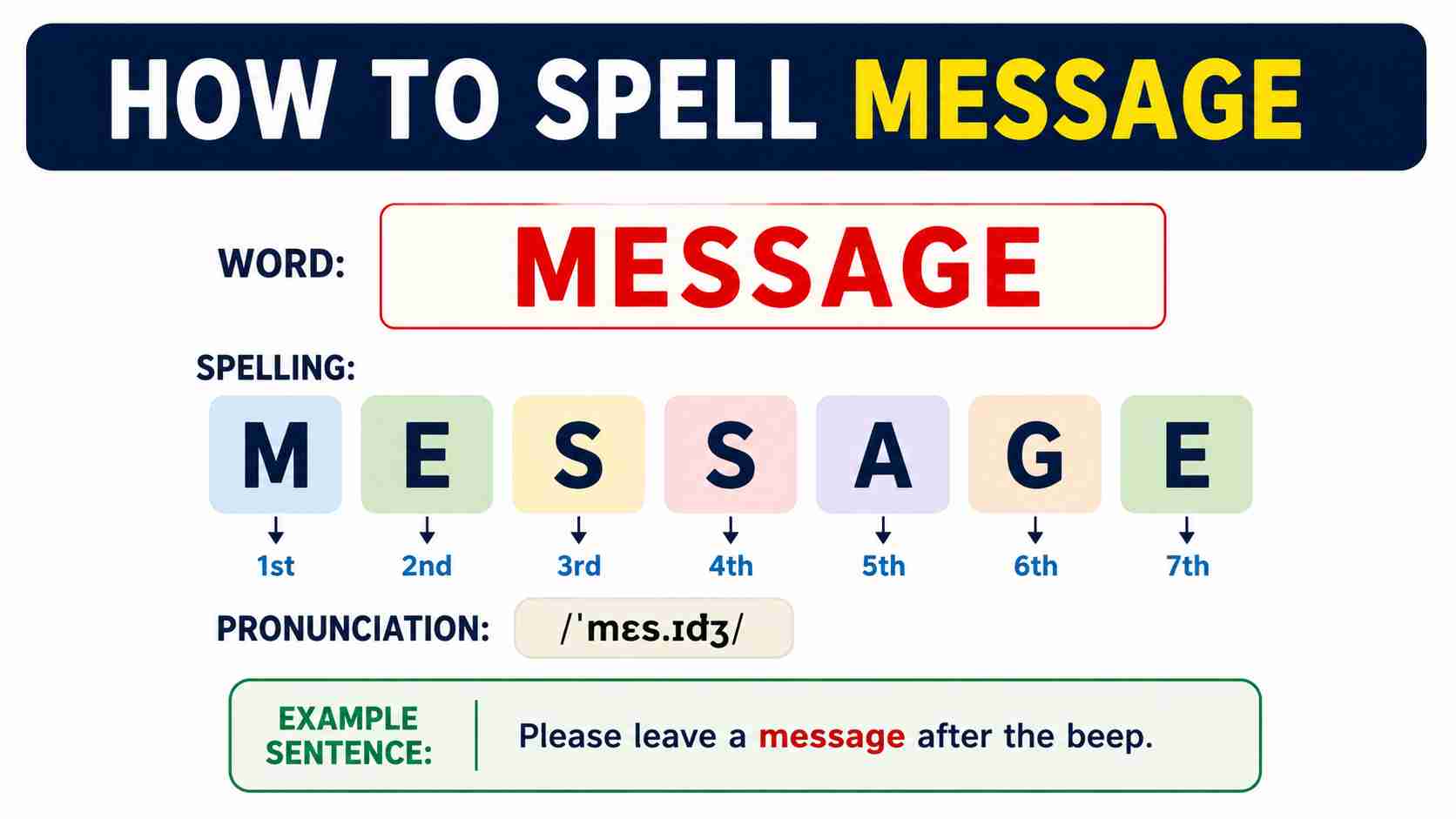
Many people search for how to spell message because the word can sometimes feel confusing while typing quickly. Whether you are writing a text, email, school assignment, social media caption, or office document, spelling words correctly matters. One small spelling mistake can change the meaning of a sentence or make your writing look less professional.
The correct spelling is simple:
Message
This word is commonly used in daily conversations, online chats, emails, and communication apps. In this complete guide, you will learn the correct spelling of message, its meaning, pronunciation, examples, grammar tips, common misspellings, and helpful ways to remember it forever.
If you often confuse words while writing or typing, this article will help you improve your English spelling skills in an easy and human-friendly way.
Correct Way to Spell Message
- The correct spelling is message.
- It is spelled as M-E-S-S-A-G-E.
- The word contains seven letters.
- “Message” is a commonly used English noun and verb.
- People often use it while texting or emailing.
- The word refers to communication sent from one person to another.
- You can send a message through phone, email, or social media.
- “Message” is easy to pronounce once you break it into parts.
- The spelling stays the same in American and British English.
- Many students search how to spell message for school work.
- The word is widely used in professional communication.
- “Message” can also mean an important idea or lesson.
- Businesses use marketing messages to communicate with customers.
- Friends send messages daily through chat applications.
- It is one of the most searched spelling-related words online.
- Correct spelling improves writing confidence.
- Spelling mistakes can create confusion in communication.
- Learning correct spelling helps improve grammar skills.
- You should practice typing the word several times.
- Remember that “message” has double S in the middle.
Meaning of the Word Message
- A message is information sent from one person to another.
- It can be spoken, written, or digital communication.
- Text messages are common in modern communication.
- Emails often contain important business messages.
- A message can express emotions, instructions, or updates.
- Teachers leave messages for students during class activities.
- Voice messages are popular on messaging apps today.
- A message may also contain hidden meaning or advice.
- Movies sometimes carry emotional social messages.
- Political speeches often include powerful messages.
- Friends exchange funny messages every day.
- Inspirational quotes can contain motivational messages.
- A warning sign may deliver a safety message.
- Brands create advertising messages for customers.
- Parents send caring messages to their children.
- The word is used in both formal and informal English.
- “Message” can work as both noun and verb.
- A phone message may include missed call details.
- Communication becomes easier through instant messages.
- Positive messages can improve someone’s mood instantly.
How to Pronounce Message Correctly
- The pronunciation is usually “MESS-ij.”
- The first part sounds like “mess.”
- The second part sounds like “ij.”
- The stress comes on the first syllable.
- It is pronounced similarly in American and British English.
- Listening practice can improve pronunciation quickly.
- Online dictionaries often provide audio pronunciation.
- Speaking slowly helps beginners pronounce words correctly.
- Practice pronunciation during daily conversations.
- Repeat the word aloud several times for confidence.
- Students often confuse spelling and pronunciation together.
- The pronunciation is simple once practiced regularly.
- Teachers commonly use the word in classrooms.
- Native speakers pronounce it smoothly in conversations.
- Reading English books improves pronunciation naturally.
- Watching English videos also helps pronunciation skills.
- Messaging apps made the word more common globally.
- Pronunciation mistakes are normal during learning.
- Confidence grows with regular English speaking practice.
- Correct pronunciation supports better communication skills.
Common Misspellings of Message
- Mesage is an incorrect spelling.
- Messsage with three S letters is wrong.
- Messege is another common spelling mistake.
- Messege is also incorrect.
- Messagee with extra E is wrong.
- Msg is only a short form, not proper spelling.
- Messag is incomplete spelling.
- Messaage with double A is incorrect.
- Mesege is a typing mistake many people make.
- Messedge is not the correct spelling.
- Some people accidentally remove one S letter.
- Others confuse the placement of vowels.
- Fast typing increases spelling errors.
- Autocorrect can sometimes create wrong spellings too.
- Learning patterns helps avoid mistakes.
- Writing practice improves spelling accuracy.
- Reading books strengthens word memory.
- Double-check spelling before sending emails.
- School students often search spelling-related words online.
- Correct spelling is always “message.”
Easy Tricks to Remember the Spelling of Message
- Remember that message starts with “mess.”
- Think of cleaning a mess before sending a message.
- The word contains double S in the middle.
- Break it into parts like “mess-age.”
- Write the word five times daily for practice.
- Use flashcards for difficult spellings.
- Practice spelling while texting friends.
- Read the word aloud while writing it.
- Visual memory helps many learners remember words.
- Keep a spelling notebook for practice.
- Repetition improves long-term memory.
- Use the word in daily conversations.
- Create funny sentences using the word.
- Teachers often recommend spelling games for practice.
- Typing practice can improve spelling speed.
- Reading articles increases vocabulary naturally.
- Watching subtitles helps recognize correct spellings.
- Focus carefully on vowel placement.
- Learn one difficult word at a time.
- Consistent practice builds confidence quickly.
Examples of Message in Sentences
- I received your message this morning.
- She sent a sweet birthday message yesterday.
- Please leave a message after the beep.
- His message inspired the entire audience.
- The teacher shared an important message with students.
- I forgot to reply to your text message.
- Her goodbye message made everyone emotional.
- The company sent a marketing message by email.
- He wrote a motivational message on social media.
- The warning message appeared on the screen.
- My friend sent me a funny voice message.
- The president delivered a strong public message.
- She checked her phone messages before sleeping.
- The movie carried a positive life message.
- We received an emergency message during the storm.
- Dad left a loving message for the family.
- The app allows users to schedule messages.
- Your kind message made my day better.
- Students shared thank-you messages with teachers.
- The message reached everyone successfully.
Why Correct Spelling Matters in Communication
- Correct spelling creates a professional impression.
- It helps readers understand your writing clearly.
- Spelling errors can confuse communication.
- Good spelling improves academic performance.
- Employers value strong writing skills.
- Correct spelling increases confidence while writing.
- Online communication depends heavily on clear spelling.
- Social media captions look better without mistakes.
- Emails should always contain proper spelling.
- Accurate spelling improves credibility.
- Readers trust polished writing more.
- Good communication skills open career opportunities.
- Proper spelling reflects attention to detail.
- Businesses use correct spelling in advertisements.
- Correct words prevent misunderstandings.
- Students receive better grades with accurate spelling.
- Spelling practice improves language development.
- Professional documents require error-free writing.
- Small spelling mistakes can change meanings.
- Learning spelling strengthens overall English skills.
Difference Between Message and Massage
- “Message” and “massage” are completely different words.
- Message means communication or information.
- Massage means body therapy or muscle treatment.
- Many beginners confuse these spellings.
- One extra letter changes the entire meaning.
- Message contains double S before AGE.
- Massage contains SS followed by AGE too, but pronunciation differs.
- Context helps identify the correct word.
- “I sent a message” is correct communication usage.
- “I booked a massage” refers to relaxation treatment.
- Pronunciation also differs between both words.
- Spelling mistakes may create embarrassing situations.
- Reading carefully prevents confusion.
- Typing slowly reduces spelling errors.
- Autocorrect may not always detect wrong word usage.
- Practice both words separately for better memory.
- Language learners commonly mix these words.
- Understanding meaning improves spelling accuracy.
- English contains many similar-looking words.
- Careful proofreading helps avoid mistakes.
How Kids Can Learn to Spell Message Easily
- Start by sounding out each letter slowly.
- Write the word repeatedly in a notebook.
- Use colorful markers for spelling practice.
- Turn spelling into a fun game.
- Practice with spelling quizzes daily.
- Parents can help children with flashcards.
- Teachers often use spelling competitions in classrooms.
- Reading storybooks improves vocabulary naturally.
- Watching educational videos helps young learners.
- Encourage children to use the word in sentences.
- Praise children when they spell correctly.
- Divide the word into smaller parts.
- Use songs or rhymes for easier memorization.
- Practice typing the word on a keyboard.
- Repeat the word during daily conversation.
- Learning through fun activities increases memory retention.
- Keep practice sessions short and enjoyable.
- Use spelling apps designed for children.
- Mistakes are part of the learning process.
- Consistent practice leads to improvement.
Text Message and Online Message Examples
- Good morning messages make people smile.
- Funny messages help brighten stressful days.
- Romantic messages strengthen relationships.
- Office messages keep teams connected.
- Online messaging is now part of everyday life.
- Students send assignment messages to classmates.
- Parents often send caring messages to children.
- Social media platforms allow instant messaging.
- Group messages help share updates quickly.
- Motivational messages inspire people daily.
- Holiday messages spread happiness and positivity.
- Voice messages are popular on chat apps.
- Video messages feel more personal and emotional.
- Businesses send promotional messages to customers.
- Emergency alerts are important safety messages.
- Positive messages improve workplace culture.
- Friendship messages create stronger bonds.
- Digital communication depends on quick messaging systems.
- Thank-you messages show appreciation and kindness.
- Text messaging has changed modern communication forever.
Fun Facts About the Word Message
- The word message comes from old French origins.
- It has been used in English for centuries.
- Messaging apps made the word even more popular.
- Billions of text messages are sent daily worldwide.
- The word appears commonly in dictionaries and books.
- Email messages became popular in the internet age.
- Ancient people used handwritten messages for communication.
- Pigeons were once used to carry messages.
- Messages can be emotional, funny, or professional.
- Secret messages were used during wars historically.
- Smartphones increased global messaging habits.
- Social media relies heavily on messages.
- Instant messaging apps changed communication speed.
- Businesses spend billions on marketing messages yearly.
- Greeting cards often contain heartfelt messages.
- Message notifications are now part of daily life.
- Some people prefer voice messages over texting.
- The longest messages are often emotional letters.
- Communication technology keeps evolving every year.
- Human connection often begins with a simple message.
FAQs
How do you spell message correctly?
The correct spelling is message spelled as M-E-S-S-A-G-E.
What does message mean?
A message means communication, information, or words sent from one person to another.
Why do people misspell message?
People often type quickly or confuse similar words, leading to spelling mistakes like mesage or messege.
Is message a noun or a verb?
The word “message” can be both a noun and a verb depending on sentence usage.
What is the difference between message and massage?
Message means communication, while massage refers to body therapy or muscle relaxation treatment.
Conclusion
Learning how to spell message is simple once you understand the correct spelling, pronunciation, and usage. The correct form is always message, and remembering the double S in the middle can help prevent mistakes. Since this word is used daily in texting, emails, social media, and professional communication, spelling it correctly is important for clear and confident writing.
With regular practice, reading, and typing exercises, anyone can improve spelling skills quickly. Whether you are a student, office worker, or English learner, mastering simple words like “message” builds stronger communication abilities and greater confidence in everyday life.